
Written by: Amanat Eye Medical Editorial Team
Published: 16-OCT-2026
Key Takeaways
- Advanced Diagnostics: MS-39 Guided Femto LASIK pairs bladeless laser surgery with high-definition corneal mapping from the SCHWIND MS-39 platform.
- Corrective Range: Designed to safely address myopia, hyperopia, and astigmatism in carefully screened candidates.
- Technology Suite: Features the SCHWIND MS-39 diagnostic scanner combined with the high-speed AMARIS 1050 RS excimer laser.
- Safety-First Screening: Candidacy depends on corneal thickness, shape, and prescription stability, confirmed only through an in-person evaluation.
- Transparent Pricing: Cost is personalized based on individual diagnostic findings and confirmed during your baseline consultation.
Looking for glasses removal surgery in Pakistan? If you are tired of relying on glasses or contact lenses daily, laser vision correction, including LASIK, Femto LASIK, and advanced bladeless options, is worth discussing with a qualified refractive surgeon.
At Amanat Eye Hospital, Rawalpindi and Islamabad, our refractive surgery team uses the SCHWIND MS-39 diagnostic platform alongside the SCHWIND AMARIS 1050 RS Limited Edition excimer laser to support detailed, individualised treatment planning for eligible patients across Rawalpindi, Islamabad, and surrounding regional areas.
What Is MS-39 Guided Femto LASIK?
MS-39 Guided Femto LASIK is Femto LASIK, a bladeless, flap-based laser vision correction procedure, planned using high-resolution corneal measurements from the SCHWIND MS-39 platform. A femtosecond laser creates a thin, uniform corneal flap, after which an excimer laser reshapes the underlying tissue to correct refractive error.
The MS-39 itself does not perform the laser treatment. Instead, it provides the surgeon with detailed data on corneal topography, thickness, and epithelial structure to support safer, more individualised treatment decisions.
What Is the SCHWIND MS-39 Technology?
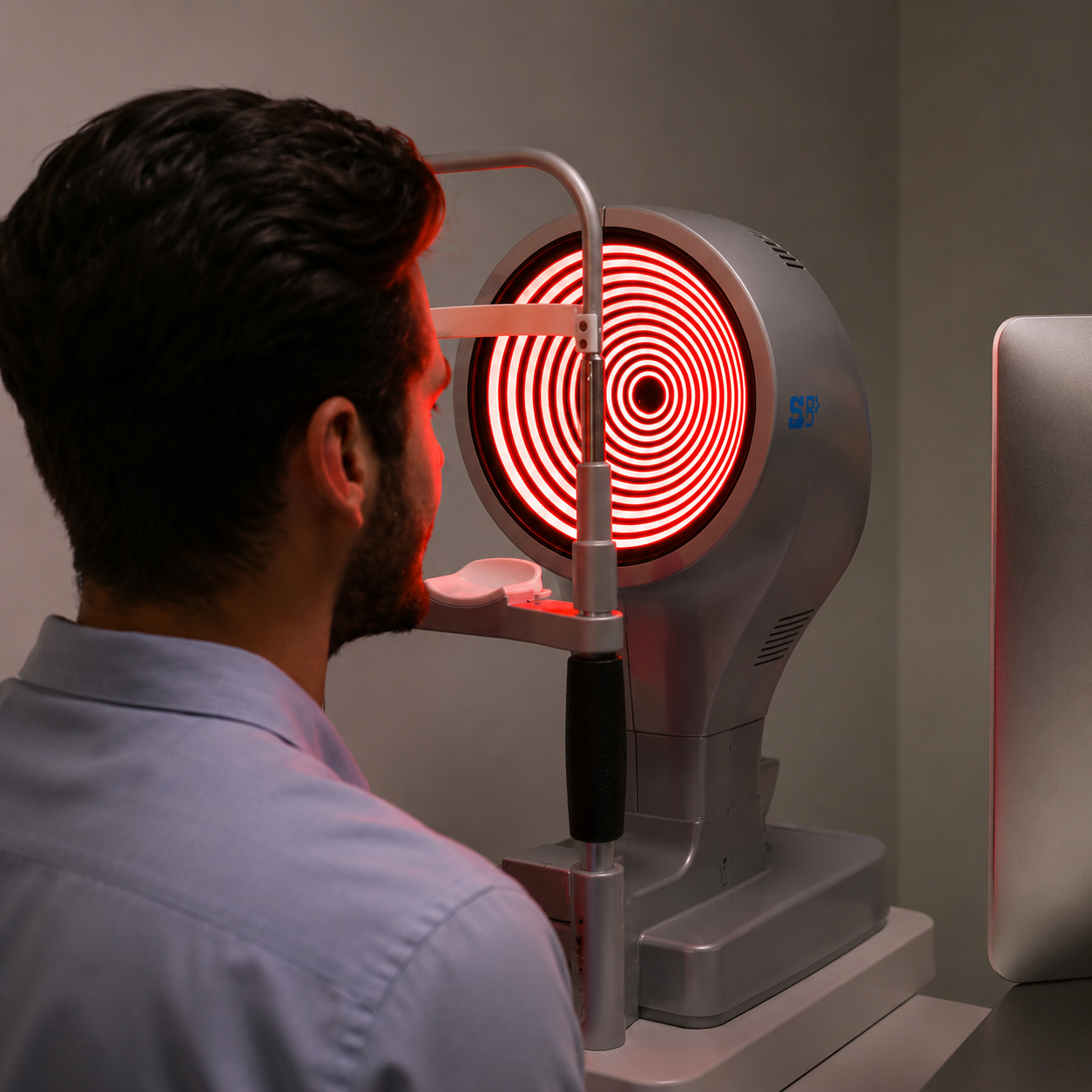
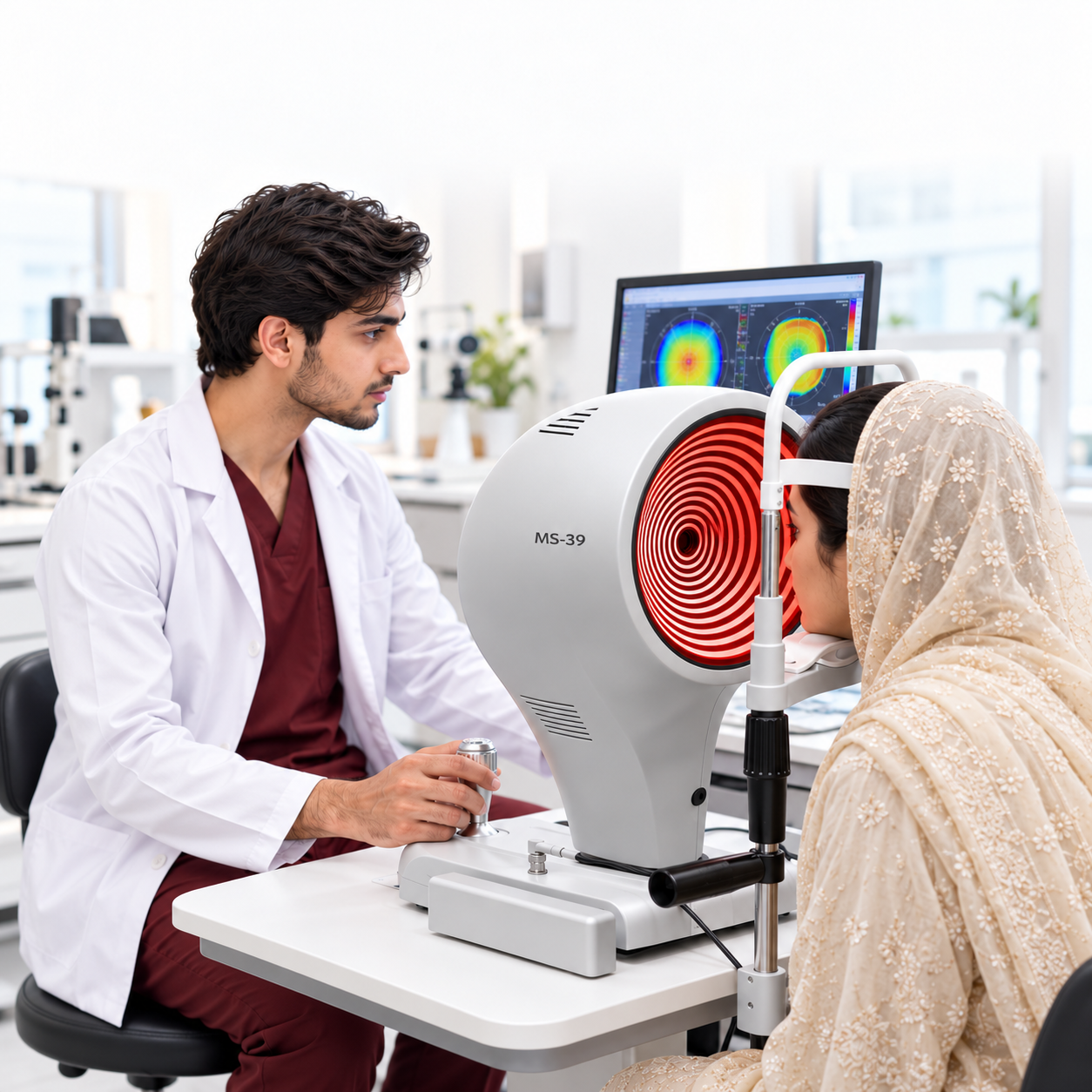
The SCHWIND MS-39 is a multi-modal anterior segment diagnostic system combining four advanced imaging layers into a single scan sequence:
- Anterior Segment OCT (AS-OCT): Produces detailed cross-sectional images of the cornea to measure true thickness across all zones.
- Placido-Disc Corneal Topography: Maps the curvature of the corneal surface to detect microscopic irregularities.
- Corneal Epithelial Thickness Mapping: Measures the eye’s outermost cell layer, helping flag subtle, early-stage corneal irregularities before surgery.
- 3D Corneal Tomography: Builds a three-dimensional structural model of the cornea to support comprehensive candidate screening.
Together, these diagnostic layers provide a significantly more detailed corneal profile than a glasses prescription or basic topography alone.
How Does MS-39 Guided Femto LASIK Work? (Step-by-Step)
- Step 1, Comprehensive Eye Exam: A thorough review of your systemic medical history, visual demands, and baseline prescription stability.
- Step 2, MS-39 Corneal Mapping: Advanced scans capture your topography, 3D tomography, pachymetry, and epithelial thickness values.
- Step 3, Suitability and Treatment Planning: The surgeon reviews all findings, including tear film volume and retinal health, to confirm candidacy. If findings raise safety concerns, alternatives such as PRK or ICL are recommended.
- Step 4, The Femto LASIK Procedure: Numbing eye drops are applied. A femtosecond laser creates the corneal flap, and the AMARIS 1050 RS excimer laser reshapes the tissue according to the custom plan.
- Step 5, Recovery and Follow-Up: Many patients notice meaningful visual improvement within 24 to 48 hours. Prescribed drops and scheduled follow-ups support long-term healing.
MS-39 Guided vs. Standard Femto LASIK
| Technical Feature | Standard Femto LASIK Assessment | MS-39 Guided Femto LASIK |
| Refractive Error Measurement | Yes; assesses standard diopter values. | Yes; assesses standard diopter values. |
| Detailed Corneal Topography | Varies depending on clinic equipment. | Included natively via high-resolution diagnostic software. |
| Epithelial Thickness Mapping | Not always included in standard packages. | Included; isolates the outermost cell layers across all zones. |
| 3D Corneal Tomography | Varies depending on available machinery. | Included; generates a complete three-dimensional model. |
| Treatment Planning Basis | Refractive exam plus standard baseline tests. | Refractive exam, full MS-39 structural profiles, and surgeon judgment. |
Who Is an Eligible Candidate for Femto LASIK?
Candidacy is determined through precise clinical evaluation, not personal preference. Fulfilling strict ophthalmic criteria is necessary to minimize surgical risk:
- Age Profile: Patients must be 18 years of age or older with a fully matured prescription.
- Prescription Stability: Must show a stable profile with less than a 0.5D change over the last 12 consecutive months.
- Refractive Range: Commonly applied to myopia corrections safely between -1D and -10D, subject to maintaining sufficient residual corneal bed safety margins.
Conditions That May Affect Candidacy
Your refractive surgeon will screen for underlying anatomical findings that could prevent safe surgery. Femto LASIK may not be appropriate if you have:
- Keratoconus: MS-39 Guided Femto LASIK is not suitable for keratoconus or progressive corneal thinning. Consult a specialist to explore alternative treatment options.
- Significant Uncontrolled Dry Eye: Inadequate tear film volume can prevent predictable flap healing.
- Active Eye Infections: Active ocular infection or localized inflammation must be fully resolved before surgery.
- Systemic Autoimmune Conditions: Diseases such as rheumatoid arthritis or lupus that can compromise natural tissue healing.
Final eligibility is determined solely by your treating surgeon after a complete clinical and diagnostic evaluation.
Is Femto LASIK Safe? Risks and Side Effects
Femto LASIK is a widely performed, well-established procedure, but it remains a surgical intervention with potential risks patients should understand beforehand.
Temporary Dry Eye Symptoms: Common in the initial weeks due to temporary changes in surface nerve sensitivity, usually managed effectively with prescribed lubricating drops.
Visual Disturbances: Mild glare, halos, or starbursts around light sources at night are common during the early weeks of visual recovery.
Residual Refractive Error: Variations in individual healing can leave a minor under- or over-correction, which may require light glasses or a minor enhancement procedure later.
Less Common Risks: Flap-related complications, infection, or inflammation occur infrequently but should still be discussed with your surgeon.
Cost of MS-39 Guided Femto LASIK in Pakistan
The cost of advanced refractive procedures in Pakistan varies between hospitals based on technology used, diagnostic depth, and individual treatment needs. Tertiary eye care setups using high-end platforms like the SCHWIND AMARIS 1050 RS typically have different pricing than basic clinics.
Before booking your procedure at Amanat Eye Hospital, confirm whether your quote includes:
- The initial detailed refractive consultation fee.
- Complete MS-39 structural diagnostic mapping scans.
- The laser surgery facility fees.
- Post-operative care medications and scheduled follow-up visits.
Frequently Asked Questions
- What is MS-39 Guided Femto LASIK?
It is Femto LASIK planned using detailed corneal scans from the SCHWIND MS-39 platform, helping the surgeon evaluate corneal shape, thickness, and structure before treatment. - Is it better than standard Femto LASIK?
The added diagnostic detail can be especially useful in complex or borderline cases, but outcomes still depend on the surgeon’s expertise and your individual eye health. - Who is eligible?
Eligibility depends on age, prescription stability, corneal thickness and shape, tear film health, and retinal condition, confirmed only through an in-person exam. - Does it permanently remove the need for glasses?
The cornea is permanently reshaped, and results are generally long-lasting, though age-related changes like presbyopia can affect near vision later in life. - Is it painful?
No. Numbing drops are used, and most patients feel only mild pressure during the procedure. - How long is recovery?
Many patients notice 85 to 90% visual improvement by the next day, with full stabilization over the following days to weeks. - Can patients with high prescriptions have this procedure?
Some patients within roughly -1D to -10D may qualify, depending on corneal measurements. If unsuitable, your surgeon may discuss ICL as an alternative. - Where can I get this in Rawalpindi or Islamabad?
Amanat Eye Hospital offers MS-39-assisted Femto LASIK evaluation at both locations. Contact us to arrange a consultation.
Book Your Consultation
With a legacy in professional eye care extending back to 1958, the refractive surgery unit at Amanat Eye Hospital provides clinical evaluations overseen by Chief Consultant Dr. Aamir Asrar.
- Official Website: https://amanateyehospital.com
- Rawalpindi/Islamabad Helplines: +92 51 843 9993 / +92 51 843 8021
- Patient Care WhatsApp: 0300 0545879
Medical Disclaimer: This article is strictly for educational purposes and does not replace a professional eye examination or personalized medical advice. Final suitability, treatment availability, and expected outcomes must be confirmed through a face-to-face evaluation by the treating ophthalmologist.