
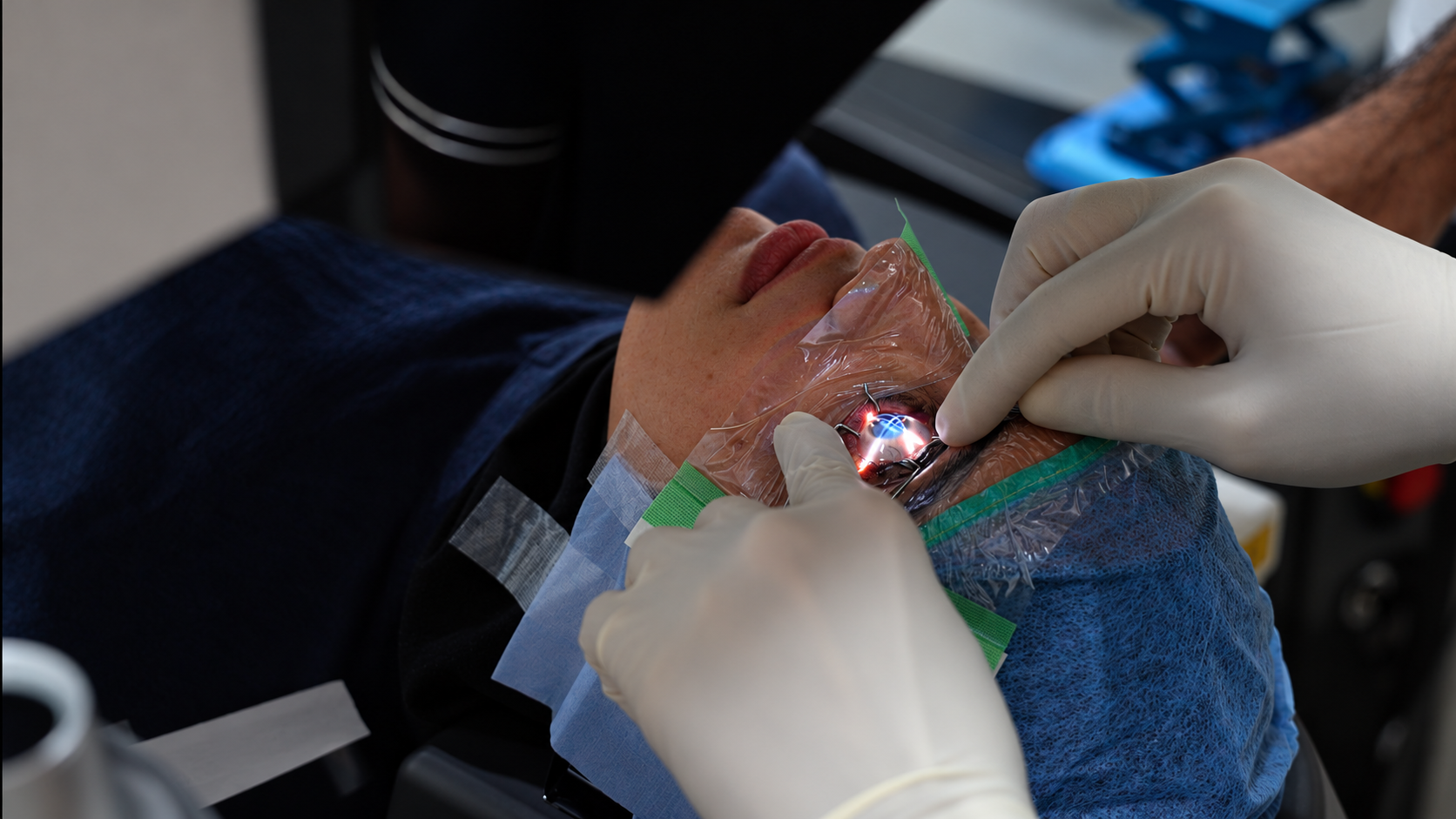
Wearing glasses every day can become part of your routine. From driving and working to playing sports or attending university, prescription glasses and contact lenses can sometimes feel inconvenient. If you are looking for a long-term way to reduce your dependence on them, glasses removal surgery may be an option worth exploring.
At Amanat Eye Hospital, patients can explore a range of refractive surgery procedures, including MS-39 Guided Femto LASIK, Femto LASIK, SMILE, CLEAR Supra, PRK, Trans-PRK and Implantable Collamer Lens (ICL) surgery. The most suitable option depends on your prescription, corneal structure, eye health and visual needs.
If you are considering laser eye surgery in Rawalpindi, Islamabad, Lahore, Peshawar or anywhere understanding these procedures is a good place to start.
What Is Glasses Removal Surgery?
Glasses removal surgery, also known as refractive surgery or vision correction surgery, includes procedures designed to correct common refractive errors and reduce dependence on glasses or contact lenses.
Normally, light entering the eye must focus correctly on the retina to produce a clear image. When the eye’s shape or focusing system prevents this, vision may become blurred.
Refractive surgery works by changing the shape of the cornea or using a corrective lens inside the eye to improve how light focuses.
These procedures may help correct:
- Myopia (short-sightedness): Difficulty seeing distant objects clearly.
- Hyperopia (long-sightedness): Difficulty focusing on nearby objects, sometimes affecting distance vision too.
- Astigmatism: Blurred or distorted vision caused by an irregular curvature of the cornea or lens.
- Selected refractive errors: Depending on the procedure and the patient’s eye measurements.
Although many patients achieve reduced dependence on glasses, results vary. Some people may still need glasses for certain activities or as their vision changes with age.
Types of Glasses Removal Surgery at Amanat Eye Hospital
Different procedures are designed for different eyes. Here is an overview of the vision correction options available at Amanat Eye Hospital.
1. MS-39 Guided Femto LASIK
MS-39 Guided Femto LASIK combines detailed corneal analysis with femtosecond laser technology and customised laser vision correction.
At Amanat Eye Hospital, the SCHWIND MS-39 diagnostic platform provides detailed information about the cornea using technologies that include anterior segment OCT, Placido-disc corneal topography, epithelial thickness mapping and three-dimensional corneal tomography. These measurements help the surgeon assess the cornea and plan treatment.
Who may benefit?
Patients seeking personalised laser vision correction may be considered after a detailed examination confirms their suitability.
What makes it different?
The treatment planning process uses detailed corneal measurements rather than relying on a glasses prescription alone. This supports a more individualised assessment and treatment plan.
2. Femto LASIK
Femto LASIK is a laser vision correction procedure that uses a femtosecond laser to create a thin corneal flap. An excimer laser then reshapes the underlying corneal tissue to correct the refractive error.
It is commonly considered for eligible patients with myopia, hyperopia or astigmatism.
Potential benefits include:
- A procedure that is generally quick to perform.
- Relatively rapid visual recovery for many patients.
- Reduced dependence on glasses or contact lenses.
Corneal thickness, corneal shape, prescription stability and overall eye health must be assessed before surgery.
3. SMILE Eye Surgery
SMILE stands for Small Incision Lenticule Extraction. It is a minimally invasive laser vision correction procedure that uses a femtosecond laser to create a small piece of tissue inside the cornea. The surgeon removes this tissue through a small incision to change the cornea’s shape.
Unlike LASIK, SMILE does not require the creation of a conventional corneal flap.
Who may be suitable?
SMILE may be considered for eligible patients with myopia and certain levels of astigmatism. Suitability depends on the prescription, corneal measurements and the specific treatment criteria.
Patients interested in glasses removal surgery without a conventional LASIK flap can discuss SMILE with a refractive surgeon at Amanat Eye Hospital.
4. CLEAR Supra
CLEAR Supra is a laser vision correction option available at Amanat Eye Hospital. CLEAR is a corneal lenticule extraction technique that uses femtosecond laser technology to correct selected refractive errors without creating a conventional LASIK flap.
The exact eligibility criteria and expected recovery depend on the treatment plan and individual eye measurements.
Patients comparing CLEAR Supra with SMILE or Femto LASIK should discuss the differences, expected benefits, limitations and recovery requirements with their surgeon before deciding.
5. PRK (Photorefractive Keratectomy)
PRK is a surface-based laser vision correction procedure. Instead of creating a corneal flap, the surgeon removes the outermost layer of corneal cells before using an excimer laser to reshape the cornea.
The surface layer then heals naturally over time.
Why might PRK be recommended?
PRK may be considered for selected patients for whom a flap-based procedure is less suitable. However, the procedure is not appropriate for every person with thin corneas or other corneal concerns.
Recovery usually takes longer than after LASIK, and temporary discomfort, light sensitivity and blurred vision can occur during the initial healing period.
6. Trans-PRK
Trans-PRK is an advanced surface laser vision correction technique in which the outer layer of corneal cells is removed using a laser rather than a separate mechanical instrument.
The laser then reshapes the cornea to correct the refractive error.
Because Trans-PRK does not involve creating a LASIK flap, it may be considered for certain patients who are suitable for surface ablation.
Healing is gradual, and visual recovery can take longer than with some other laser procedures. Your surgeon will explain the expected recovery period and aftercare requirements.
7. ICL (Implantable Collamer Lens)
ICL is a vision correction procedure in which a specially designed corrective lens is placed inside the eye, behind the iris and in front of the natural lens.
Unlike LASIK, PRK and lenticule extraction procedures, ICL does not reshape the cornea using a corrective laser.
It may be considered for selected patients, including some with higher prescriptions who are not suitable for corneal laser surgery. Eligibility depends on factors such as the prescription, the depth of the eye’s anterior chamber, endothelial cell count and overall eye health.
ICL is an intraocular procedure and carries risks that differ from those of corneal laser surgery. A detailed examination is essential before treatment.
Which Glasses Removal Procedure Is Best for You?
There is no single procedure that is best for everyone. The right choice depends on your eyes, not just the number on your glasses prescription.
| Procedure | How it works | Important consideration |
| MS-39 Guided Femto LASIK | Detailed corneal mapping supports customised Femto LASIK planning | Requires thorough corneal assessment |
| Femto LASIK | Creates a flap and reshapes the cornea with a laser | Corneal suitability is essential |
| SMILE | Removes a small piece of corneal tissue through a small incision | Used for selected prescriptions |
| CLEAR Supra | Uses femtosecond laser lenticule extraction | Eligibility depends on clinical measurements |
| PRK | Reshapes the cornea from the surface | Surface healing takes time |
| Trans-PRK | Uses a laser for surface preparation and corneal reshaping | Recovery may be slower than LASIK |
| ICL | Places a corrective lens inside the eye | Requires assessment for intraocular surgery |
Your surgeon may recommend one of these procedures or advise against surgery if the risks outweigh the potential benefits.
Who Is Eligible for Glasses Removal Surgery?
Not everyone who wears glasses is a suitable candidate for refractive surgery.
Eligibility is generally assessed by considering:
- Age and overall eye health.
- Whether the glasses prescription has remained stable.
- Corneal thickness, shape and structural health.
- The degree and type of refractive error.
- Tear film quality and dry eye symptoms.
- Retinal health and other relevant eye conditions.
- Medical history and any medications that may affect surgery or healing.
Pregnancy, breastfeeding, unstable prescriptions, certain corneal conditions and uncontrolled eye diseases may affect the timing or suitability of treatment.
Only a comprehensive eye examination can determine whether surgery is appropriate.
What Happens During a Glasses Removal Consultation?
At Amanat Eye Hospital, the assessment process helps the refractive team understand your visual needs and determine which procedures may be suitable.
A consultation may include:
- Vision and prescription testing
Your refractive error is measured to establish the type and degree of correction required.
- Corneal mapping and thickness measurements
Diagnostic tests help evaluate the cornea’s shape, thickness and structural characteristics.
- Tear film and eye health assessment
The surgeon checks for dry eye and other conditions that could affect treatment or recovery.
- Retinal examination, when indicated
The retina and other internal eye structures are assessed as part of determining your overall suitability.
- Personalised treatment discussion
Your surgeon explains the suitable options, expected outcomes, possible risks, recovery and follow-up requirements so you can make an informed decision.
Is Glasses Removal Surgery Permanent?
Laser vision correction changes the shape of the cornea, and these structural changes are intended to be long-lasting. However, that does not mean your eyesight will remain unchanged throughout your life.
Some patients may experience residual refractive error or develop changes in their prescription over time. Age-related conditions, including presbyopia, can also affect near vision, even after successful surgery.
The goal is to reduce dependence on glasses or contact lenses while maintaining appropriate eye health and realistic expectations.
Is Glasses Removal Surgery Safe?
Refractive surgery is widely performed, but like any surgical procedure, it carries potential risks.
Depending on the procedure, some patients may experience temporary dry eye, glare, halos around lights or changes in night vision. Dry eye symptoms are more likely or may be more noticeable in patients who already have dry eye before surgery. This is why evaluating tear film health before treatment is an important part of the preoperative assessment.
Some patients may still need glasses after surgery, and not everyone is a suitable candidate for every procedure.
At Amanat Eye Hospital, a detailed eye examination helps assess your suitability and identify factors that may affect treatment outcomes. Your refractive surgeon will explain the potential benefits, risks and recovery expectations before recommending a procedure.
Why Consider Amanat Eye Hospital for Glasses Removal Surgery?
Amanat Eye Hospital provides a range of refractive surgery options for patients seeking vision correction in Pakistan.
Patients can explore:
- Multiple treatment options: MS-39 Guided Femto LASIK, Femto LASIK, SMILE, CLEAR Supra, PRK, Trans-PRK and ICL.
- Advanced diagnostic assessment: Including detailed corneal mapping and imaging to support treatment planning.
- Individualised recommendations: Treatment selection based on your prescription, eye measurements and visual needs.
- Specialist consultation: An opportunity to discuss your suitability, expected results and potential risks before proceeding. Dr. Aamir Asrar is the chief consultant and best eye consultant of Amanat Eye Hospitals who specializes in corneal, cataract, and refractive surgery.
- Continuity of care: Follow-up appointments to monitor healing and visual recovery.
Amanat Eye Hospital has provided eye care since 1958, with services across Rawalpindi, Islamabad, Lahore and Peshawar.
Glasses Removal Surgery Cost in Pakistan
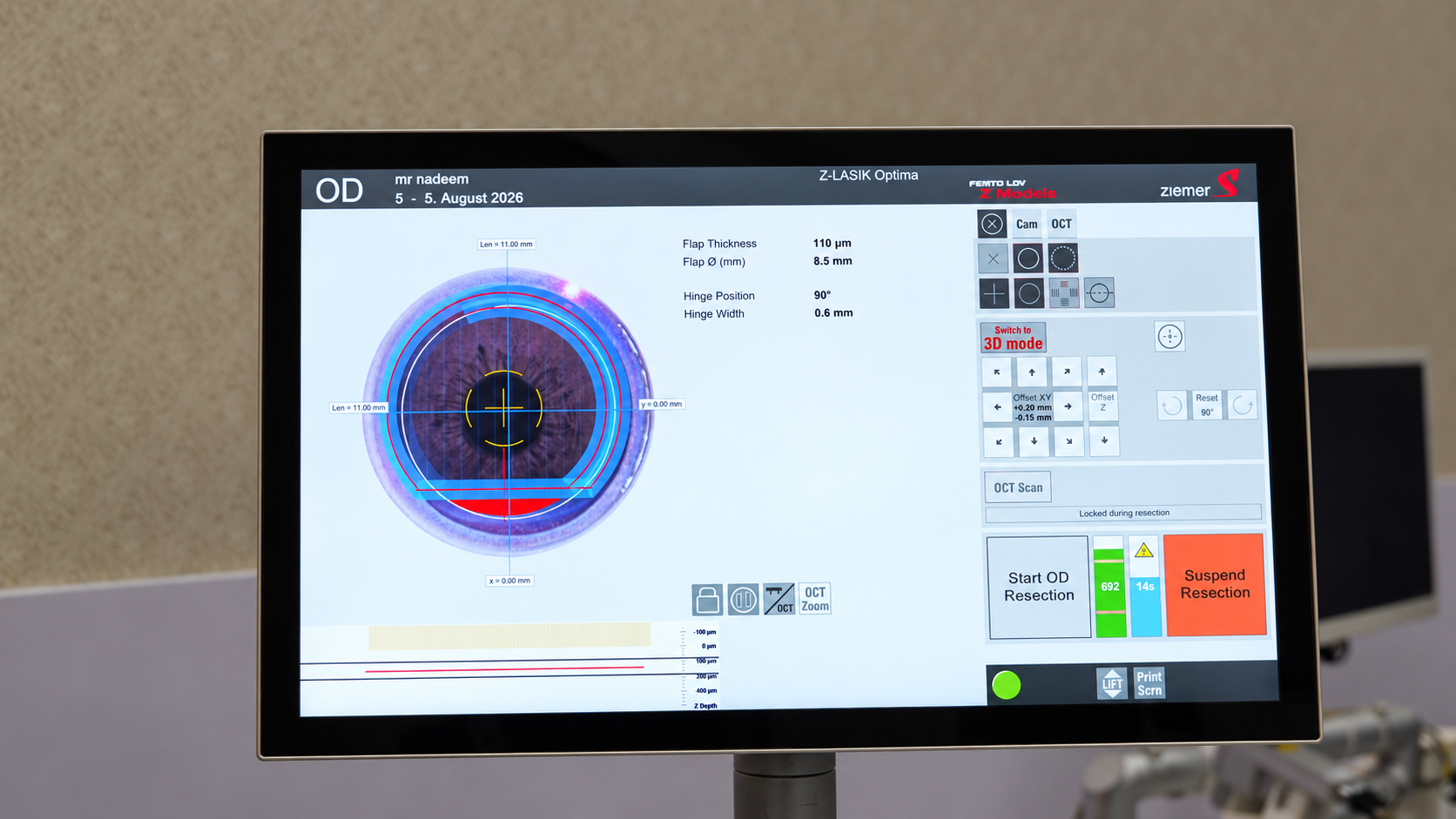
The cost of glasses removal surgery in Pakistan depends on the procedure, your glasses prescription, diagnostic requirements and individual treatment plan. Different vision correction procedures involve different technologies and surgical requirements, so the total cost may vary from one patient to another.
How Much Does Glasses Removal Surgery Cost at Amanat Eye Hospital?
The exact cost depends on which procedure is suitable for your eyes. A consultation with the refractive surgery team can help establish your eligibility, explain the available options and clarify the applicable treatment charges.
Looking for glasses removal surgery in Rawalpindi or Islamabad? Contact Amanat Eye Hospital through +92 51 843 9993 or website www.amanathospital.com to enquire about current prices and book a refractive surgery assessment.
The final treatment recommendation and cost should be confirmed directly with Amanat Eye Hospital after an appropriate clinical assessment.
Frequently Asked Questions About Glasses Removal Surgery
1. What is the best glasses removal surgery in Pakistan?
The best procedure depends on your prescription, corneal structure and eye health. Options at Amanat Eye Hospital include MS-39 Guided Femto LASIK, Femto LASIK, SMILE, CLEAR Supra, PRK, Trans-PRK and ICL.
2. Is laser eye surgery painful?
Numbing eye drops are commonly used during laser vision correction. Patients may experience pressure or mild discomfort during the procedure. Temporary irritation, discomfort or light sensitivity can occur afterward, particularly with surface procedures.
3. How long does recovery take after glasses removal surgery?
Recovery varies by procedure. Many patients notice improved vision relatively quickly after LASIK, while PRK and Trans-PRK generally require a longer surface-healing period. Your surgeon will provide procedure-specific guidance.
4. Can I get glasses removal surgery if I have a high prescription?
Yes, patients with a high glasses prescription may be eligible for glasses removal surgery, depending on their eye health and clinical measurements. Procedures such as SMILE, Femto LASIK and other laser vision correction options may be suitable for selected patients with prescriptions ranging from approximately -1.00 to -10.00 diopters, depending on the procedure and individual eligibility criteria.
For patients with higher prescriptions or those who are not suitable for corneal laser surgery, Implantable Collamer Lens (ICL) surgery may be another option.
5. Can people with thin corneas undergo glasses removal surgery?
Some patients with thinner corneas may qualify for alternative procedures, while others may not be suitable for surgery. Thin corneas require careful assessment; no procedure should be assumed safe based on thickness alone.
6. Will I ever need glasses again after surgery?
Some patients may need glasses for residual refractive error, particular activities or age-related near-vision changes. Surgery reduces dependence on visual aids but cannot guarantee that glasses will never be needed again.
7. How do I book a glasses removal consultation at Amanat Eye Hospital?
Contact Amanat Eye Hospital to arrange a refractive surgery consultation. The team can guide you through the assessment process and help you understand which options may be suitable for your eyes.
Explore Your Options for Glasses Removal Surgery
You do not have to choose a procedure based on advertisements or someone else’s experience. Start with a proper assessment of your eyes and understand the options available to you.
At Amanat Eye Hospital, our refractive team can help you explore suitable vision correction procedures, understand the potential benefits and risks, and decide on the next step with confidence.
Book your refractive surgery consultation at Amanat Eye Hospital.
Website: https://amanathospital.com/femto-lasik-pakistan/
Serving patients in Rawalpindi, Islamabad, Lahore and Peshawar.
Medical note: This article is for general educational purposes and does not replace a consultation with an ophthalmologist. The availability and suitability of individual procedures should be confirmed with the hospital’s refractive surgery team.