
About Keratoconus
What is Keratoconus?
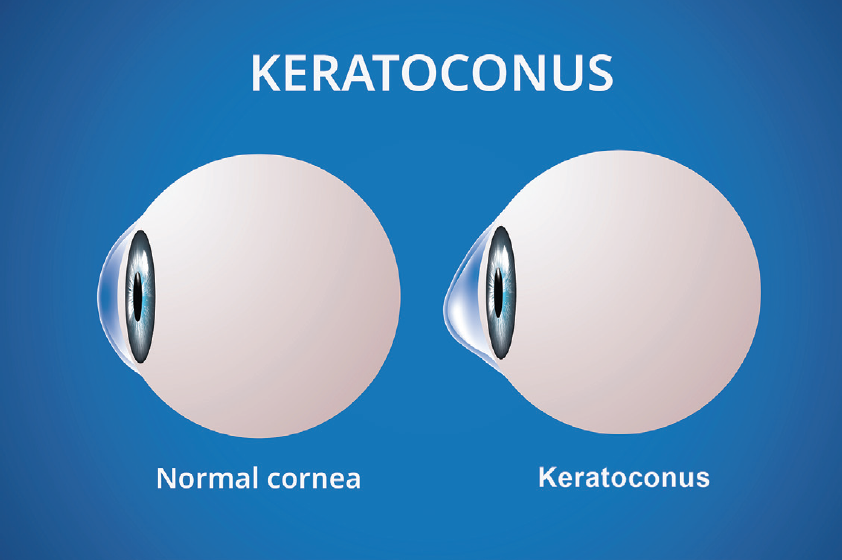
Keratoconus is a progressive disease of the outer transparent layer of the eyeball (cornea) affecting young adults mostly in their twenties. It is characterized by progressive thinning of the normally round cornea causing it to bulge forward and assume a cone-like shape. This irregularity in the cornea results in the formation of a distorted image of objects on the retina & gives rise to Blurred vision. It generally affects both eyes but can also occur unilaterally.
What causes Keratoconus?
The exact cause of keratoconus is not known but the latest research suggests that the cornea becomes weakened due to an imbalance of enzymes within the corneal tissue. Young patients produce high levels of free radicals which cause oxidative damage to the cornea in absence of protective enzymes. This causes thinning and bulging of the cornea.
Keratoconus Symptoms
- Nearsightedness– Also known as myopia, this is the inability to see distant objects clearly
- Astigmatism –This is the blurring of vision at all distances
- Glare & Flare– due to the disturbances in the amount of light
- Frequent changes in lens prescriptions – this is the commonest reason why Keratoconus is detected